Maria Luiza De Grandi, journalist at Ciência Rural magazine, Santa Maria, Rio Grande do Sul, Brazil.
Fernanda Gabryela Bezerra de Araújo, Animal Scientist at Universidade Federal do Ceará (UFC), Fortaleza, Ceará, Brazil.
A study carried out at the Department of Animal Science of Universidade Federal do Ceará (UFC) evaluated different feeding programs for European meat-type breeder quail and found evidence that small restrictions in feed supply can reduce feed intake and bird mortality without affecting egg production, egg quality, or hatchability rates. The study was developed in partnership with the institution’s meat quail breeding group and involved undergraduate and graduate students as well as faculty specialized in poultry nutrition, management, and genetics. The article Feeding programs for the grower phase of two strains of meat-type breeding quails was published in the journal Ciência Rural (vol. 55, no. 8, 2025).
According to researcher Fernanda de Araújo, “the idea arose because the production sector had been reporting difficulties in controlling the body weight of meat quail breeders, which consume large amounts of feed and may become obese, reducing fertility, increasing mortality, and raising production costs,” in addition to the lack of specific information for this category of birds, since “most previous studies focus on Japanese laying quail or broilers, and there were almost no data on European meat-type breeder quail.”
The experiment used 480 quail distributed into three feeding programs between 14 and 42 days of age: ad libitum feeding (as much as desired), controlled feeding per bird per day, and a version of controlled feeding with a 10% restriction. The birds were monitored from the initial phase up to 51 weeks of age, evaluating feed intake, weight gain, sexual maturity, egg production and quality, and incubation parameters. According to the researcher, “our results show that a mild restriction of only 10% during growth reduces feed intake, weight gain, and final body weight, and delays the age at first egg by about four days, without compromising any reproductive parameter.”
The data confirm these findings: birds in the restricted group consumed less feed and had lower body weight both at 42 days and at the end of the laying cycle, in addition to showing lower mortality, whereas birds fed ad libitum had the highest mortality during the productive phase. “Reducing mortality without harming fertility, hatchability, and egg quality is extremely relevant for the sector,” Fernanda comments. She emphasizes that controlling breeder body weight is essential to prevent obesity, which may impair ovulation and egg development.
Despite differences in feed intake and body weight, there were no losses in egg production, egg mass, internal and external egg quality, or hatchability rates among the evaluated programs. “This means we can adjust feeding programs during the growth phase to reduce costs and improve bird welfare without losing reproductive efficiency — something very valuable for commercial farms,” she explains.
In practice, the results may help farms design more efficient feeding programs for breeder quail. Scientist Fernanda summarizes: “if the farm’s goal is management simplicity, ad libitum or controlled feeding works well; but if the objective is to reduce feed intake and mortality, mild restriction is a safe alternative, provided it is properly monitored.” She reinforces that any change should be applied only during the growth phase, since after 42 days all birds received laying feed ad libitum.
The study stands out for monitoring quail throughout the entire production cycle and for simultaneously evaluating performance, maturity, production, egg quality, and incubation variables — aspects still little explored in European meat-type quail. “Our work helps fill an information gap and has the potential to guide management manuals and on-farm decision-making,” the author states.
GRANDI, M.L. and ARAÚJO, F.G.B. Evaluation of the impact of feeding programs on weight control and reproductive efficiency of meat quail breeders [online]. SciELO in Perspective | Press Releases, 2026 [viewed ]. Available from: https://pressreleases.scielo.org/en/2026/03/18/evaluation-of-the-impact-of-feeding-programs-on-weight-control-and-reproductive-efficiency-of-meat-quail-breeders/



 A study carried out at the Department of Animal Science of Universidade Federal do Ceará (UFC) evaluated different feeding programs for European meat-type breeder quail and found evidence that small restrictions in feed supply can reduce feed intake and bird mortality without affecting egg production, egg quality, or hatchability rates. The study was developed in partnership with the institution’s meat quail breeding group and involved undergraduate and graduate students as well as faculty specialized in poultry nutrition, management, and genetics. The article Feeding programs for the grower phase of two strains of meat-type breeding quails was published in the journal Ciência Rural (vol. 55, no. 8, 2025).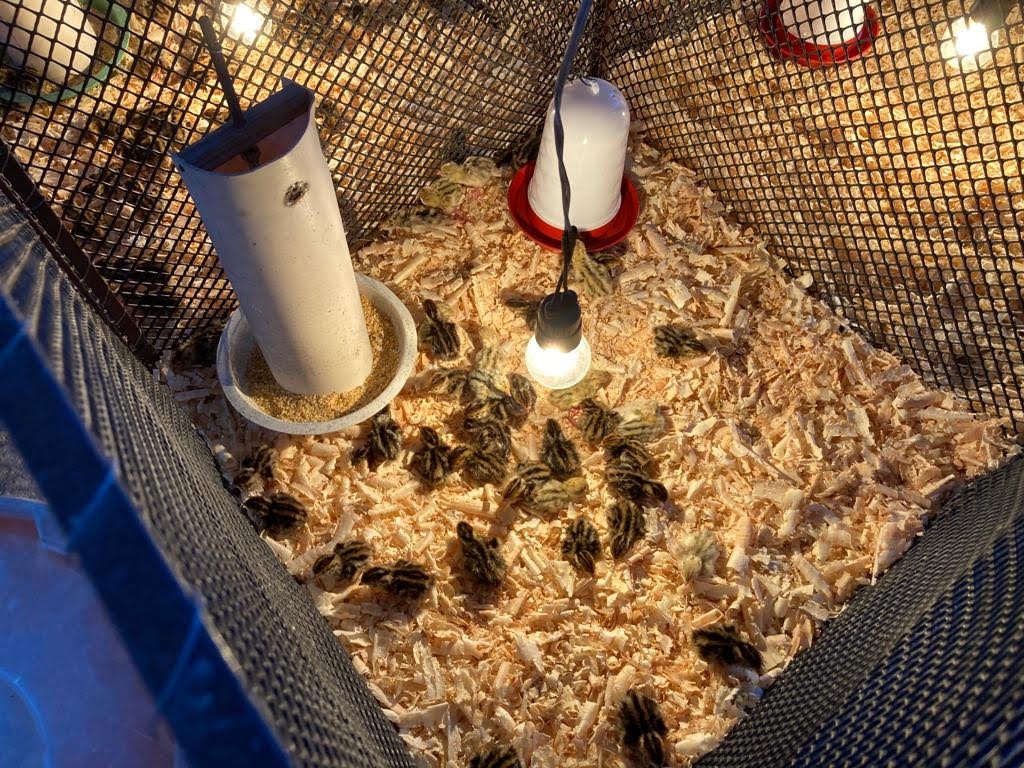





Recent Comments