



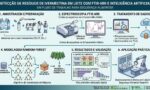
An investigation detected ivermectin residues in milk using mid-infrared spectroscopy and artificial intelligence. The Random Forest model showed high accuracy and low errors. The technique proved to be fast, sensitive, inexpensive, non-destructive, and sustainable, with potential for monitoring milk quality and safety. … Read More →
Continuous low dose methimazole improves control in relapsed Graves’ disease

A Brazilian retrospective study found that continuous low dose methimazole provided better long-term thyroid control in patients with relapsed Graves’ disease than radioiodine therapy or a second methimazole course. The treatments showed similar outcomes regarding thyroid eye disease, quality of life, weight gain, and safety. … Read More →
Differences in the transmission rate of Foot-and-Mouth Disease outbreaks in Rio Grande do Sul between 2000 and 2001
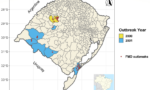
Analysis of the 2000 and 2001 foot-and-mouth disease outbreaks in Rio Grande do Sul shows greater spread in 2001 due to delayed reporting, animal movement, and lower herd immunity. The results reinforce the importance of surveillance, rapid response, and modeling for prevention. … Read More →
Open Science in Latin America and the Prospects for Urban Studies

Scholarly communication is undergoing transformations linked to open science, digital infrastructures, and global struggles for visibility. In the Latin American context, the role of journals and SciELO in consolidating a more inclusive, transparent publishing system guided by the IDEIA principles stands out. … Read More →
Contextual frameworks and possible interpretations for science communication

The expansion of scientific discourse through social media and podcasts is redefining the ways in which knowledge is disseminated and the formats in which it is published. Urbe’s experience highlights the potential of these strategies to broaden reach, diversify audiences, and strengthen the social impact of scientific output. … Read More →
Research data repository in Urban Studies

Open access to research data is a key pillar of open science, as it enhances the transparency of findings and facilitates their reuse in future research. This topic raises epistemological questions relevant to Urban Studies, positioning itself as a central issue on the contemporary editorial agenda. … Read More →
The Ethical and Editorial Challenges of Artificial Intelligence in Knowledge Production for Urban Studies

The use of AI in scholarly communication strains principles of transparency, authorship, and integrity by introducing opacity, undermining accountability, and reinforcing geopolitical asymmetries. In response, there is a growing need for editorial policies that regulate its use and preserve the legitimacy of the knowledge produced. … Read More →
Reflecting on Urbanism in Latin America Between Empirical and Epistemological Contributions

Latin American urban studies challenge models from the Global North, calling for approaches that are sensitive to their specific characteristics. The journal urbe’s output highlights epistemological plurality, thematic diversity and a focus on the region, reflecting a field grounded in critical and contextually situated research agendas. … Read More →
urbe. Revista Brasileira de Gestão Urbana and the contributions to thinking about urbanism in Latin America

Since its inception, the journal urbe has been guided by a strong editorial commitment to open science and to the output of situated knowledge about and within Latin America—principles addressed in the series of posts for the SciELO in Perspective Blog’s Special Week. … Read More →
Ultra-processed foods linked to disordered eating and poor diet quality in adults with obesity

A cross-sectional investigation conducted in Brazil found that higher consumption of ultra-processed foods among adults with obesity is associated with more symptoms of binge eating and bulimia, as well as higher levels of emotional and uncontrolled eating and poorer diet quality. … Read More →


Recent Comments